The instructor called my first attempt a very enthusiastic bowl. One side was thicker than the other, and the rim wandered. I took it home, put my keys in it and felt an unreasonable amount of affection for the thing.
Let yourself be a beginner in public
At the studio, everyone could see what I was making. That felt uncomfortable until I noticed that most people were looking at their own hands. Being a beginner was much less interesting to everyone else than I had imagined.
Choose a friendly class or a small project with room for error. Tell the teacher what you need to feel comfortable. You do not have to prove that you are naturally good at something before you are allowed to try it.
Pay attention to the material
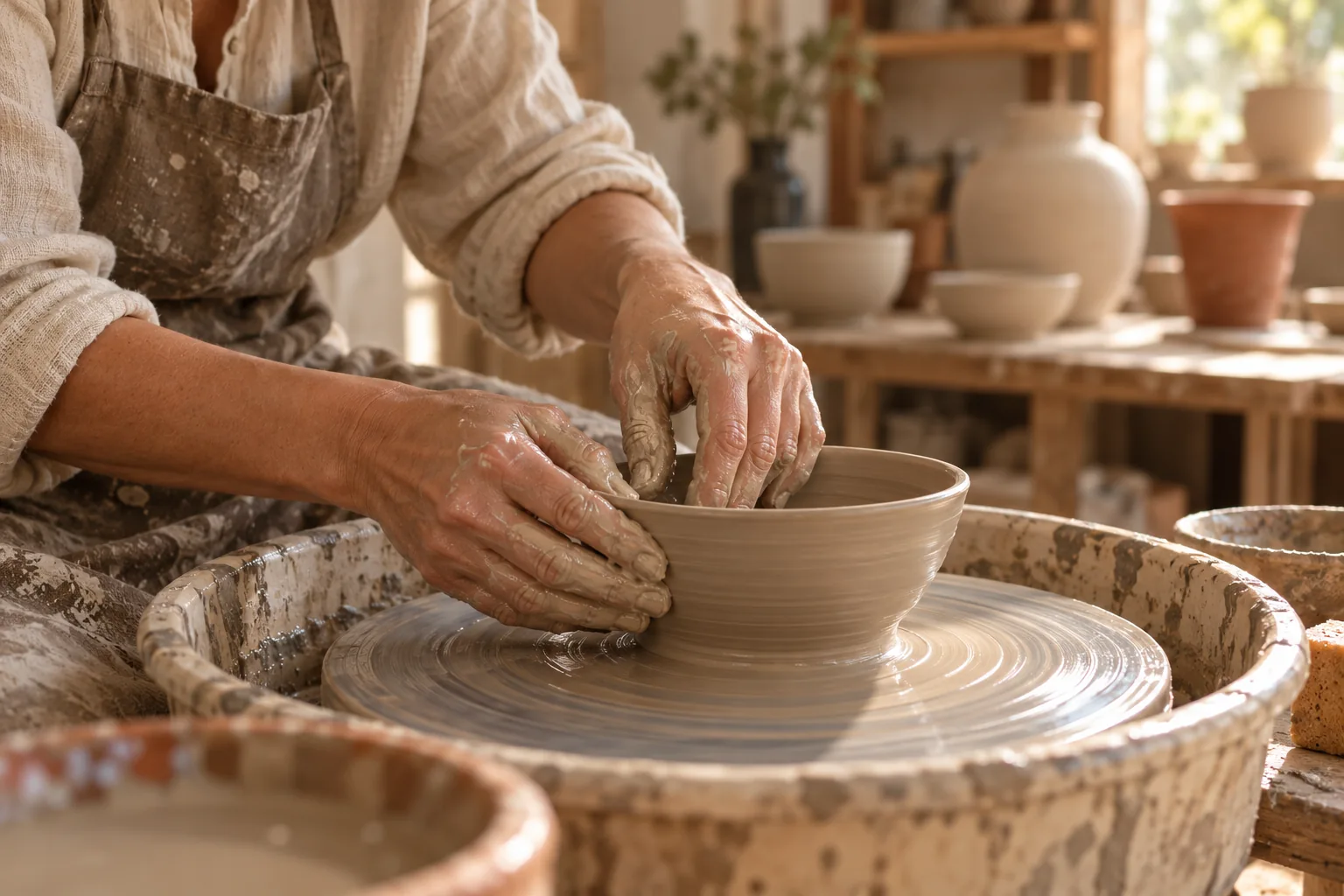
When I pushed too hard, the clay wall folded. As I slowed down, I could feel where it was thick and where it was thinning. The bowl gave me something specific to adjust.
The same can happen with paper, thread or wood. Start with safe tools and sensible guidance. Ask what the material is doing before deciding what it ought to become.
Keep the evidence
The bowl is not a stepping stone towards a better bowl. It is a record of one afternoon spent learning. I like its heavy base and awkward rim because I remember making them.
For now, the bowl holds my keys. I can enjoy using it without deciding whether pottery will become a regular part of my week.
The first attempt is allowed to look like a first attempt. That is part of its charm.