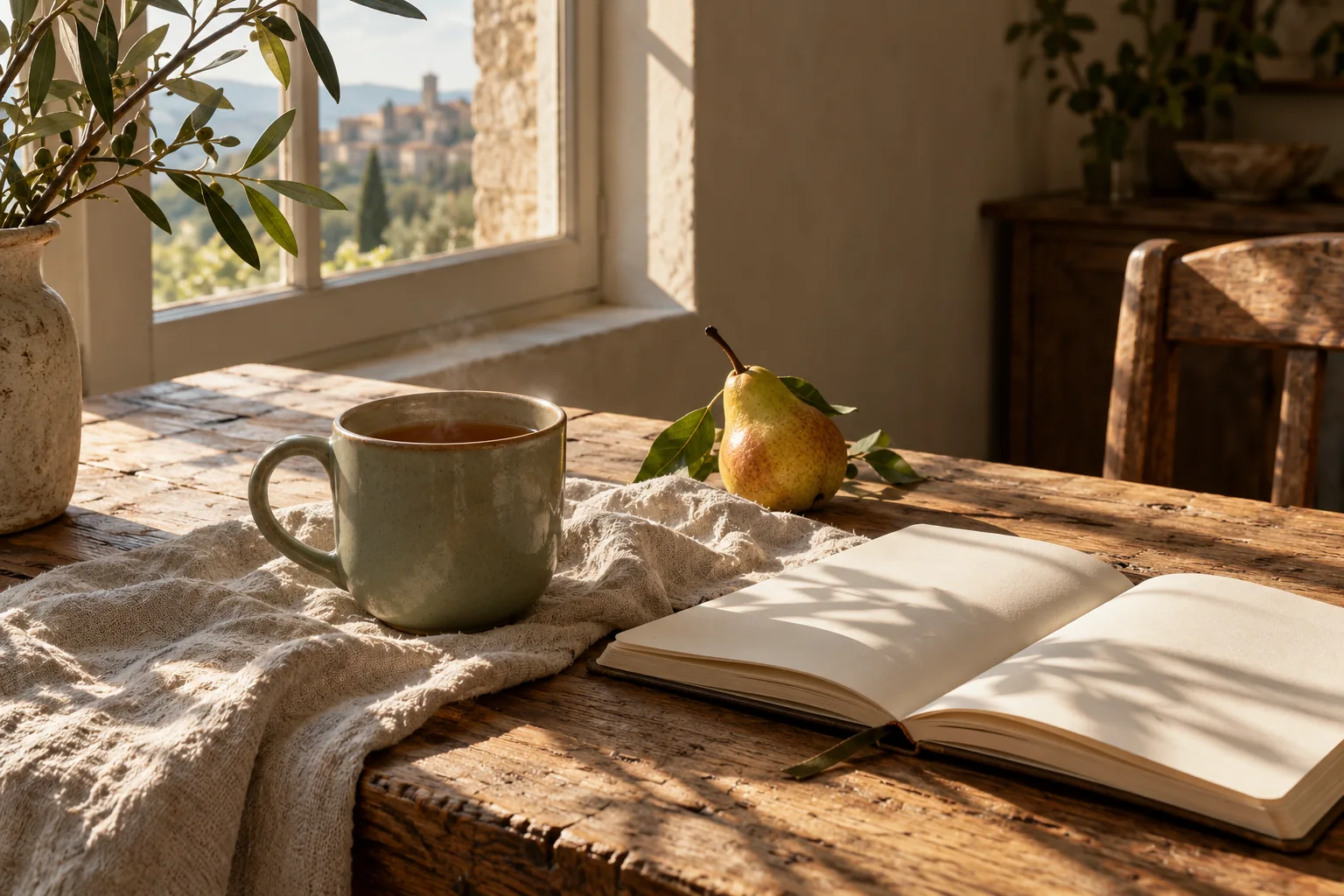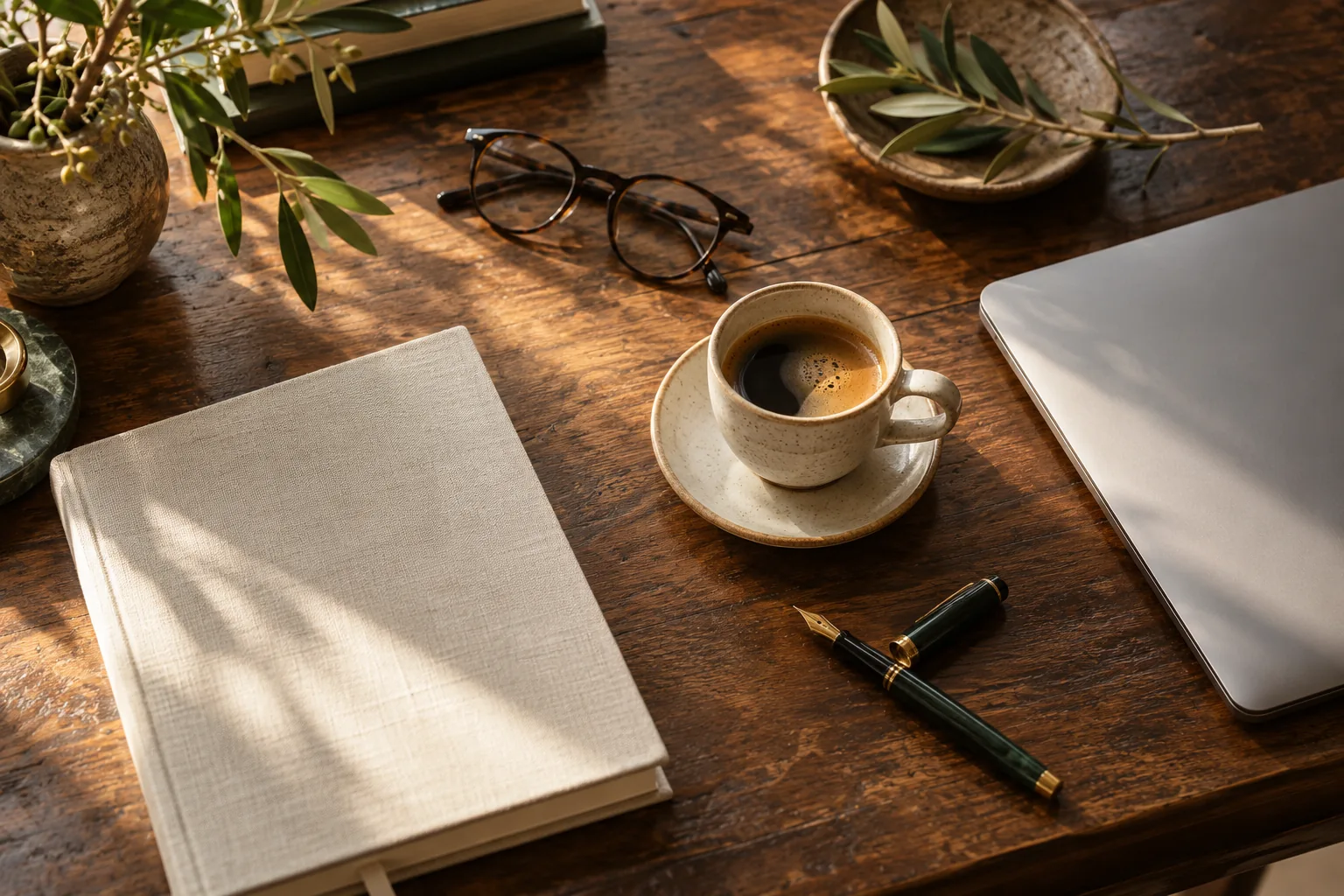

The nicest notebook I own remained empty for almost a year. Its paper seemed to deserve ideas better than mine. Eventually I wrote a shopping list on the first page. A very expensive barrier collapsed, and the notebook began to be useful.
Give the first page a modest job
A beautiful beginning can make an awkward demand. Try writing the date, drawing the cup in front of you or making a list of things you noticed on the way home. A first page only has to make the second page possible.
I keep receipts, odd phrases and sketches in the same book. There is no system beyond moving forward. The disorder is useful: an unfinished thought from Tuesday sometimes finds its companion in a drawing made on Friday.
Keep something for yourself
When every thought might become a post, it is easy to start composing for an imaginary reader. A private notebook offers a different kind of attention. You can contradict yourself, repeat yourself and change your mind without an explanation.
Decide whether privacy matters to you, then put the notebook somewhere appropriate. You do not owe anybody a tour of its pages. The freedom to be uninteresting is part of the practice.
Return without catching up
If you leave a month between entries, begin where you are. There is no missing assignment to complete. A notebook is a place you can return to, not a record that needs to account for every day.
I still leave plenty of pages unfinished. I have learned to like the small evidence that I was thinking, even when I did not arrive anywhere.
The shopping list did what a year of saving the notebook for something special could not: it got me onto the second page.