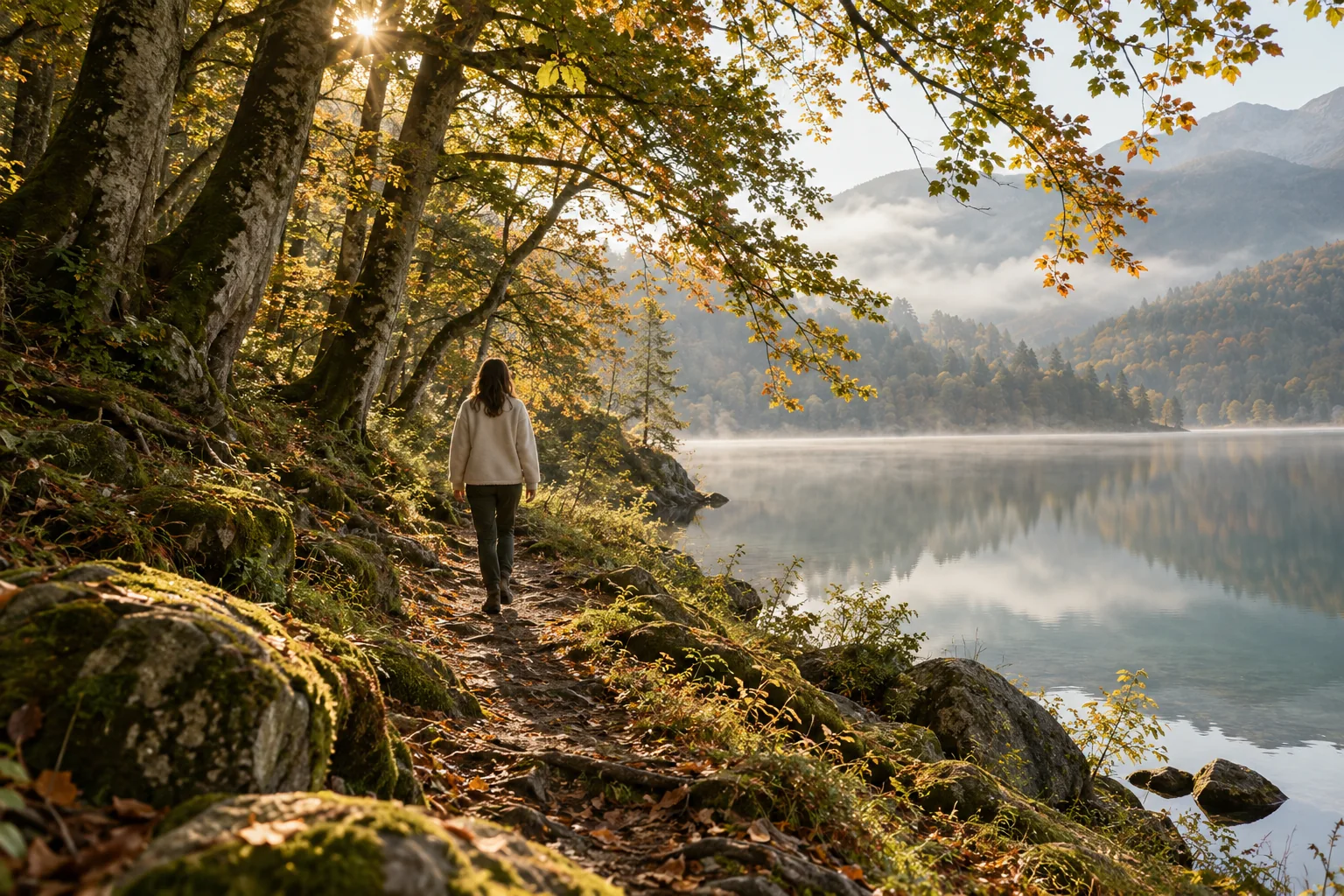

I used to make every walk serve a purpose: collect a parcel, buy milk, reach a daily total. Then one afternoon I took the same short route and left the errands at home. The path had not changed. My way of looking at it had.
Choose a route that asks little
Familiarity leaves room for attention. I knew where the path turned and which section stayed muddy after rain. I did not need a map or an ambitious destination. I could look at the trees instead of wondering how far I had left to go.
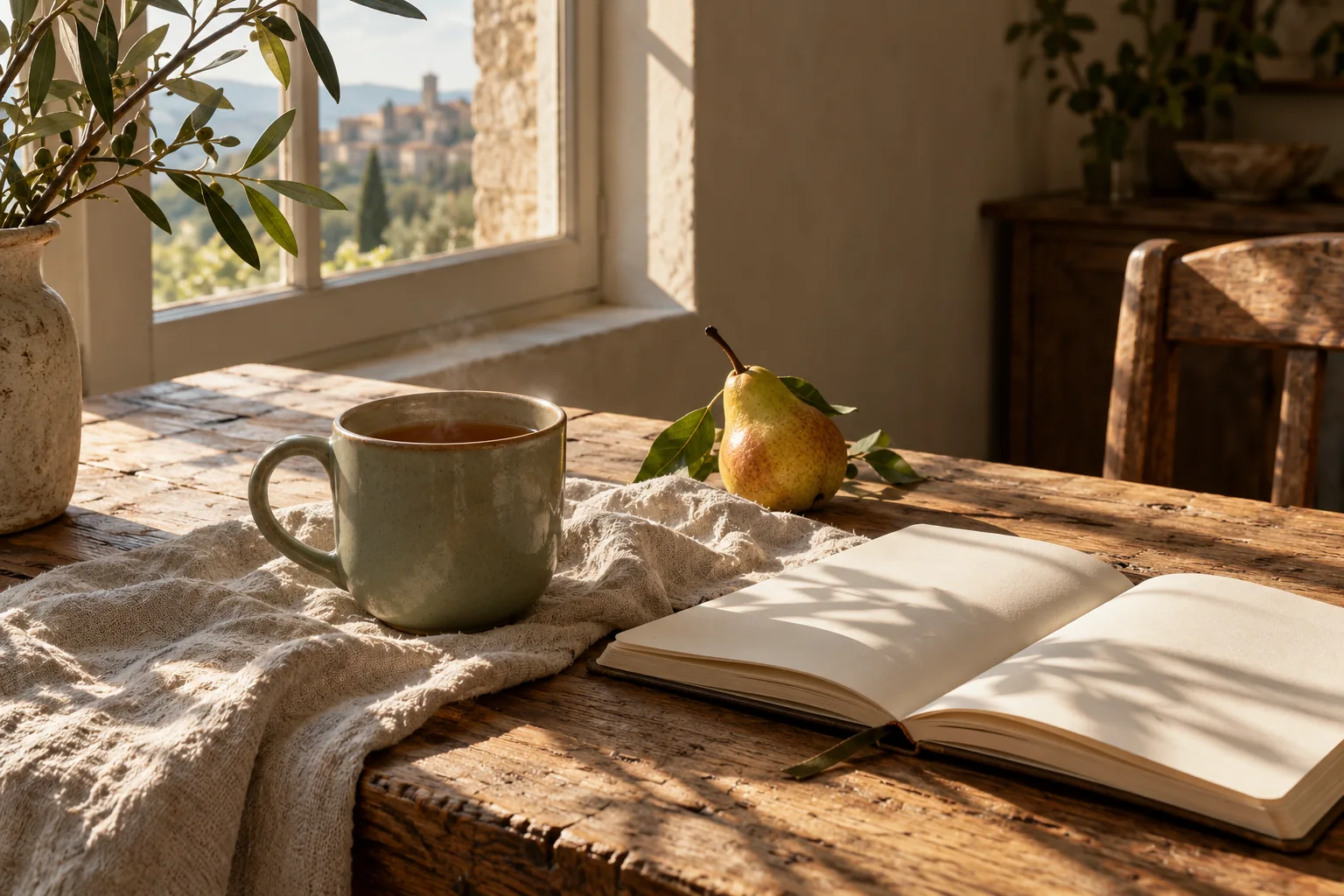
Choose a route that suits your access needs and energy. A slow circuit of a nearby garden, time on a balcony or sitting beside an open window can offer their own encounters with the world outside.
Notice one thing closely
There was a tree I had passed hundreds of times without seeing the pale lichen on its bark. I stopped for a moment. That was all. I did not photograph it or look up its name until much later.
You might notice the sound of your shoes, a change in the light or the pattern of brickwork. You can stop there. A walk does not have to turn into a lesson in tree names.
Bring the slower pace home
When I returned, the same tasks were waiting. I still had messages to answer and dinner to make. But the walk had given the afternoon a little punctuation. I was beginning again rather than continuing without a break.
On busy days I take the shortest version of the route. I still go out, but I leave the parcel and the shopping until another time.
I had passed that tree hundreds of times before I noticed the lichen.