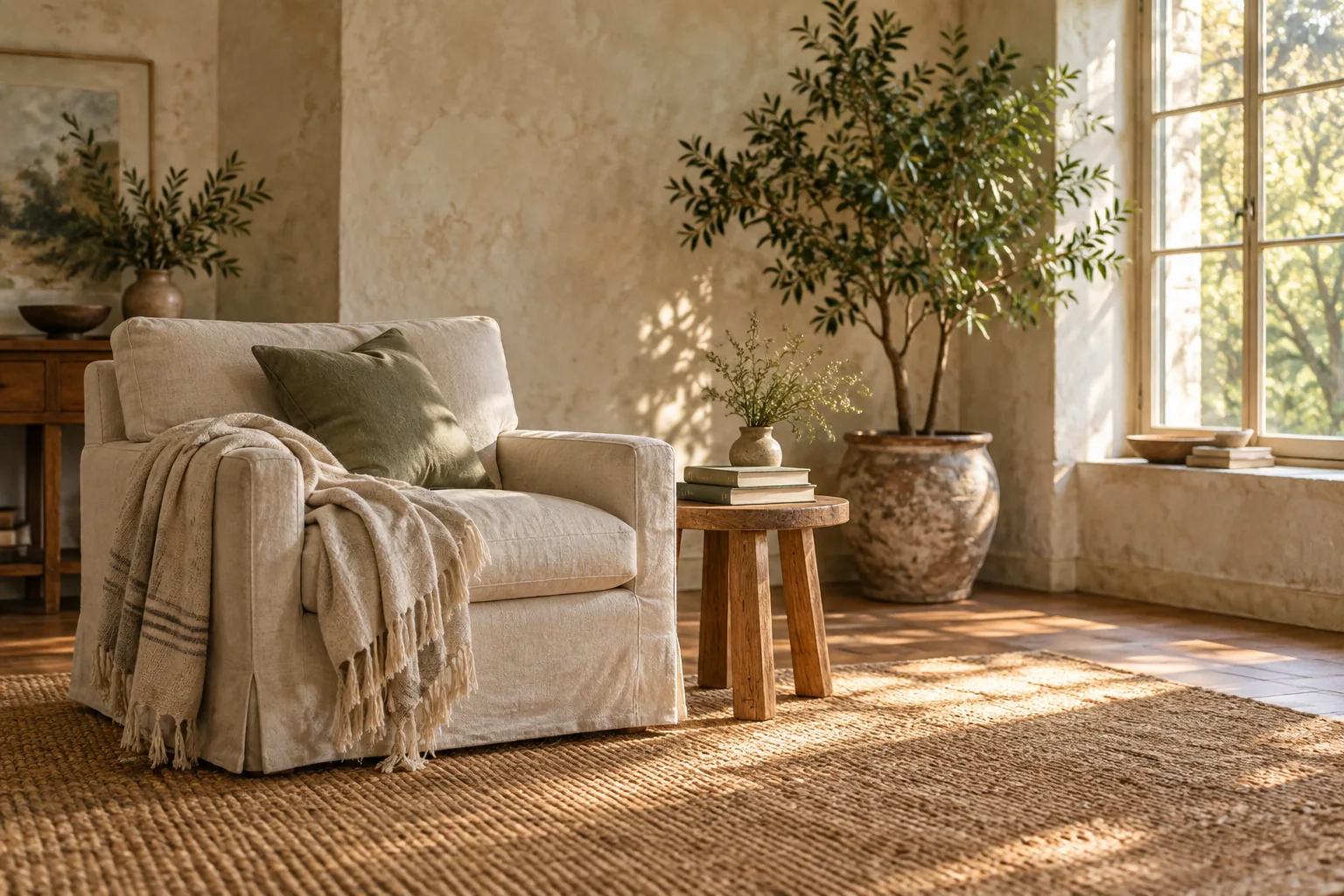

Every large attempt to reorganise my home used to begin with everything on the floor. By evening I was tired and the room looked worse. The first change that lasted was much smaller: I cleared one chair so that I could sit in it.
Begin with a place you use
Rather than asking what to remove, I asked what I wanted to do. I wanted somewhere to read after dinner. That made the decision concrete: the chair needed a lamp, a small surface and no pile of unopened post.
Choose one useful outcome. A clear patch of kitchen counter might make breakfast easier. A hook by the door might stop your keys travelling around the house. The room does not need to look like a photograph.
Move slowly around sentimental things
Not every object has to justify its space in practical terms. I kept the chipped cup because it reminded me of a friend. I let go of the stack of magazines because I had been moving it, unread, for years.
A box for undecided things can help, provided you choose a date to open it again. The point is to postpone a difficult decision, not to create another permanent pile.
Notice what becomes easier
A week later, the chair was still clear because I was using it. That was more persuasive than any rule about clutter. The small improvement had a daily purpose, so I wanted to protect it.
There are still crowded shelves in the room. They can wait. Beginning again is not always necessary; sometimes it is enough to make one ordinary action easier.
Decide what you want to do in one corner, then arrange it so you can.